

How Brave Group is Engineering the Future of Entertainment
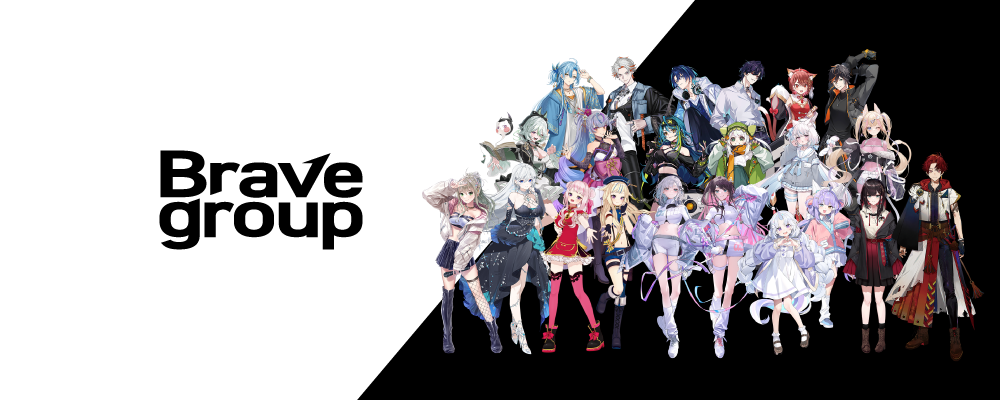
In the rapidly shifting landscape of Japanese IP, few companies have moved with the velocity of Brave Group. Founded in 2017, the organization has evolved from a specialized VTuber production house into a global "Next Generation IP Incubator."
With a recent ¥8 billion funding round and a workforce that soared to over 430 employees by 2026, Brave Group isn't just riding the VTuber wave—it is building the surfboard, the wave machine, and the beach itself. For talent looking to enter the world of virtual entertainment, the company’s recruitment philosophy offers a window into how "fun" becomes a professionalized, global business.
Company Profile
- Company: Brave Group Inc.
- CEO: Keito Noguchi
- Industry: IP Production, Virtual Esports, & Platform Technology
- Scale: 430+ employees across 18 group companies
- Key Projects: VSPO!, RIOT Music, Brave Stores, M&A Global Initiatives
The Challenge: Scaling Creativity Across Borders
Before its current expansion phase, Brave Group faced the classic "startup-to-scaleup" hurdle. The virtual entertainment market was booming—estimated at USD 3.13 billion globally—but the infrastructure to support talent, manage international fanbases, and maintain technical stability was fragmented.
Brave Group realized that to become a global leader, they couldn't just manage "stars"; they had to manage the entire ecosystem. This required a shift from a talent agency mindset to a multi-tiered corporate structure involving IP Production, IP Platforms, and IP Solutions.
The Interview: Inside the Brave Culture
We sat down with the recruitment leadership to discuss what it means to work at the intersection of tech and "Otaku" culture.
Q: Your corporate purpose is "Strike wonder in 8 billion hearts." How does that translate into a Tuesday morning at the office?
"It means we operate with a global-first mindset even when we’re doing local tasks," explains the hiring team. "When we look at projects like VSPO! (the virtual esports project), we aren't just thinking about a stream. We’re thinking about the tech stack that makes it lag-free, the merchandise distribution in Bangkok, and the community management in Los Angeles."
Q: With 18 different group companies, how do you maintain a unified culture?
"We rely heavily on our 'Brave Culture Deck.' We’re transparent that we are a profit-driven business that loves entertainment. We need people who are 'fans' but also 'pros.' One of our core values is being an 'Owner'—we expect everyone, from studio operators to project managers, to treat their IP like their own company."
"We aren't just looking for people who like anime. We are looking for 'engineers of wonder'—people who understand that behind every 3D avatar is a complex web of motion capture technology, financial modeling, and cultural localization."
The "Brave" Way: A Three-Pillar Success Model
Brave Group’s recruitment strategy is tied directly to its three business segments:
- IP Production: This is the creative heartbeat. Recruitment focuses on character designers, voice directors, and "talent managers" who function more like startup CEOs for individual IPs.
- IP Platform: This is the tech backbone. The company looks for software engineers and UX designers to build the "stadiums" of the future—studios and streaming tools that allow virtual stars to interact with fans in real-time.
- IP Solutions: This acts as a consultancy. Here, Brave Group hires strategic thinkers who can help other non-entertainment corporations enter the metaverse and virtual branding space.
The Results: A Global Footprint
The impact of this structured approach to talent and IP is visible in the data:
- Massive Capital Injection: Secured ¥14 billion in cumulative funding from diverse partners like Kakao Investment and Mizuho Bank.
- Global Reach: Established physical and digital presences in the US, Europe, APAC (Thailand), China, and Korea.
- Diversified Revenue: Not just ad-sense; the launch of Brave Stores has turned digital fandom into a global merchandising powerhouse.
Key Takeaways for the Future of Work
What can other HR tech and talent leaders learn from Brave Group’s recruitment surge?
- Documented Culture is Non-Negotiable: As you scale globally, your "Culture Deck" becomes your most important product. It aligns a developer in Tokyo with a store manager in Bangkok.
- Hire for the "Adjacent Possible": Brave Group doesn't just hire from entertainment. They pull from finance (for M&A), logistics (for e-commerce), and tech (for platform building).
- Balance Passion with Professionalism: The "fan-pro" hybrid is the gold standard. Passion provides the energy; professional systems provide the scale.
Conclusion
Brave Group proves that the "Future of Work" in Japan isn't just about automation—it's about the professionalization of imagination. By building a robust corporate structure around the seemingly "niche" world of VTubers, they have created a global engine for entertainment that is as much about data and divinity as it is about drawing.
For those looking to join, the message is clear: the virtual world is ready for you, provided you have the "Brave" heart to build it.
To explore current career opportunities and join a team at the forefront of virtual culture, please get in touch with our team via the JINZ.AI Candidate Contact Form.
You might also like
Legacy Management Group: Innovating Japan’s Inheritance Sector
In the landscape of Japanese professional services, few domains are as emotionally charged and technically complex as inheritance and asset taxation. As Japan navigates an aging population and a massi

LightBridge: Bridging Japan’s Silicon Photonics R&D Gap
The global photonics landscape is currently undergoing a "supercycle." Driven by the insatiable data demands of AI and the rapid adoption of LiDAR in autonomous systems, the industry is shifting from
From Builder to Transformer: How SaR is Redefining the AI Career Path in Japan
In an era where "AI implementation" often becomes a buzzword for mere automation, a quiet revolution is happening in Tokyo’s data sector. SaR (Solve and Reclaim) , a firm specializing in data and A