

How SHIFT Inc. is Solving Japan’s IT Talent Shortage
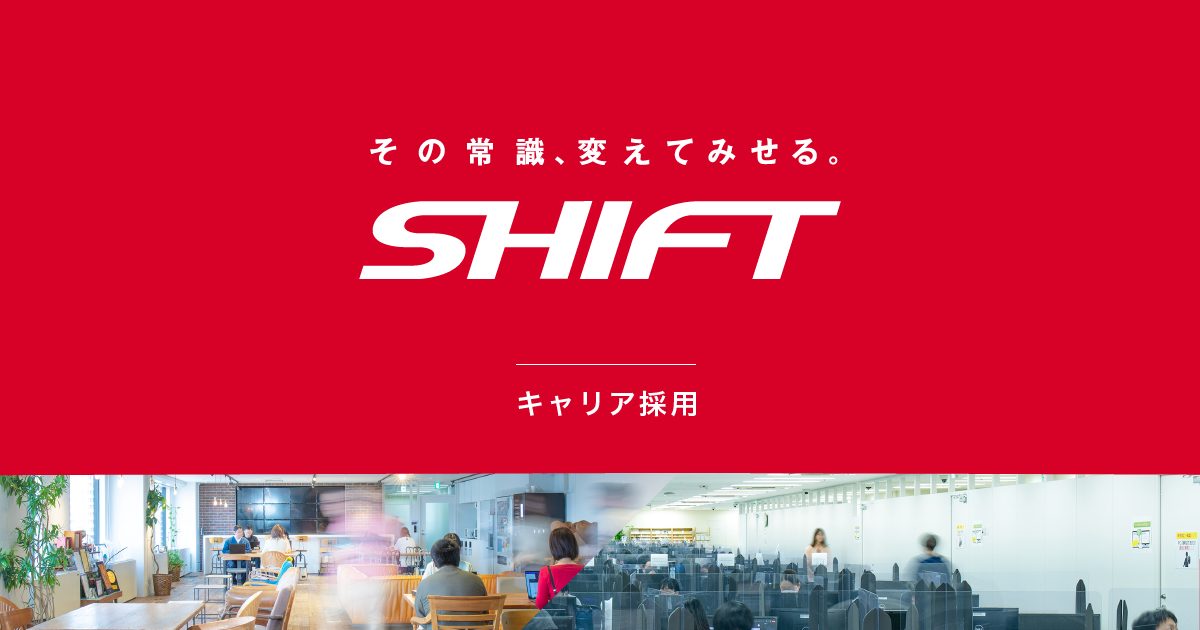
In the heart of Tokyo’s Azabudai Hills, a revolution in the Japanese software industry is taking place, but it isn’t just about code—it’s about people. SHIFT Inc., a leader in software testing and quality assurance (QA), has become one of the fastest-growing companies in Japan. However, their true "product" might be their radical approach to talent acquisition.
While the Japanese IT sector struggles with a chronic labor shortage, SHIFT is hiring nearly 2,700 employees annually. How? By looking where no one else is: beyond the resume. Through their proprietary "CAT" examination and a culture that values aptitude over experience, SHIFT is proving that the future of work is not about finding "ready-made" talent, but discovering and developing human potential.
Profile Box Company: SHIFT Inc.
Industry: Software Testing & Quality Assurance
Recruitment Focus: Non-IT professionals, Career Changers, and New Graduates
Key Strategy: The "CAT" (Computer Aptitude Test) assessment model
The Challenge: A Structural Talent Deficit
Before its current growth spurt, SHIFT faced the same bottleneck as every other tech firm in Japan: a shrinking population and a highly competitive, rigid market for experienced engineers. Traditional hiring methods—relying on certifications and years of experience—led to high costs and slow growth.
SHIFT realized that if they stayed in the "red ocean" of competing for the same pool of seasoned developers, they could never scale to their ambitious "SHIFT3000" goal (reaching ¥300 billion in net sales by 2030). They needed a "blue ocean" strategy: a way to turn non-IT professionals into world-class QA experts.
The Interview: Scaling with Science
In analyzing SHIFT’s recruitment philosophy, it becomes clear that their success is driven by a data-driven "Human Resource Engine." We sat down (metaphorically) with the principles guiding their recruitment website and recent strategy reports.
Q: Most companies demand three to five years of experience. Why does SHIFT welcome people with zero IT background?
"We believe testing ability is an innate aptitude, not just a learned skill," the company’s philosophy suggests. By creating the CAT (Computer Aptitude Test), SHIFT shifted the focus. They discovered that individuals with high logical reasoning skills—whether they were former teachers, chefs, or retail managers—could often outperform veteran programmers in finding bugs.
"We seek out new value concepts and work sincerely to provide value to the world. Our CAT exam has been taken by over 12,000 people, proving that talent for the digital age exists in every corner of society."
Q: How do you manage the sheer volume of 4,000 applicants every month?
The secret lies in friction reduction. SHIFT utilizes a Video Interview System that allows hiring managers to review candidates asynchronously. By recording interviews (with permission), departments can make decisions within 24 hours. "We’ve removed the scheduling gridlock," the recruitment team notes. This speed ensures that high-potential talent isn't lost to competitors during a weeks-long interview cycle.
Q: Is recruitment essentially the 'growth engine' for the entire company?
Absolutely. SHIFT identifies recruitment and sales as the two pillars of their business. Without a constant influx of talent, they cannot fulfill the massive market demand for QA (estimated at a ¥5.5 trillion market in Japan alone). Their M&A strategy also mirrors this; they often acquire smaller firms specifically to integrate their "human capital" into the larger SHIFT ecosystem.
Results: Measurable Impact
The results of this "aptitude-first" strategy are visible in SHIFT’s financial and organizational growth:
- Massive Scale: Recruited approximately 2,700 employees in fiscal year 2023 alone.
- Financial Growth: Reported consolidated net sales of ¥129.8 billion in FY2025 (a 17% YoY increase), with operating profit surging by 48%.
- Internal Mobility: Their "Top-gun" internal advancement system sees over 1,000 applicants monthly, allowing employees to rapidly increase their salary and seniority based on merit.
- Market Leadership: The CAT exam has become an industry benchmark, with participation rates rivaling national IT certifications.
"By converting 'non-IT personnel' into 'IT personnel,' SHIFT is not just growing a company; it is expanding the very capacity of the Japanese economy."
Key Takeaways for the Future of Work
- Aptitude Over CVs: In a tight labor market, testing for potential (logical thinking, attention to detail) is more effective than filtering by past titles.
- Speed is a Competitive Advantage: Using video interviews and rapid-response assessment tools allows companies to secure top talent before they are off the market.
- Create Your Own Talent: Don’t just hire for the skills of today. Build a "recruitment-to-training" pipeline that turns motivated outsiders into specialized insiders.
- Strategic M&A for People: Use acquisitions not just for technology, but to solve "succession challenges" in smaller firms, bringing их talented teams under a more robust corporate umbrella.
Conclusion
As SHIFT Inc. expands its footprint into the Middle East and scales its AI-specialized quality assurance services, its recruitment website stands as a blueprint for the future of talent acquisition. By moving away from traditional credentials and toward a scientific assessment of human potential, SHIFT has turned a national labor shortage into a unique corporate advantage. They aren't just a software testing company; they are a talent transformation engine.
To explore current career opportunities and join a team at the forefront of software testing and quality assurance (QA), please get in touch with our team via the JINZ.AI Candidate Contact Form.
You might also like
Legacy Management Group: Innovating Japan’s Inheritance Sector
In the landscape of Japanese professional services, few domains are as emotionally charged and technically complex as inheritance and asset taxation. As Japan navigates an aging population and a massi

LightBridge: Bridging Japan’s Silicon Photonics R&D Gap
The global photonics landscape is currently undergoing a "supercycle." Driven by the insatiable data demands of AI and the rapid adoption of LiDAR in autonomous systems, the industry is shifting from
From Builder to Transformer: How SaR is Redefining the AI Career Path in Japan
In an era where "AI implementation" often becomes a buzzword for mere automation, a quiet revolution is happening in Tokyo’s data sector. SaR (Solve and Reclaim) , a firm specializing in data and A