

Organic Group Inc.: The Success Story Redefining Japan’s Startup Playbook
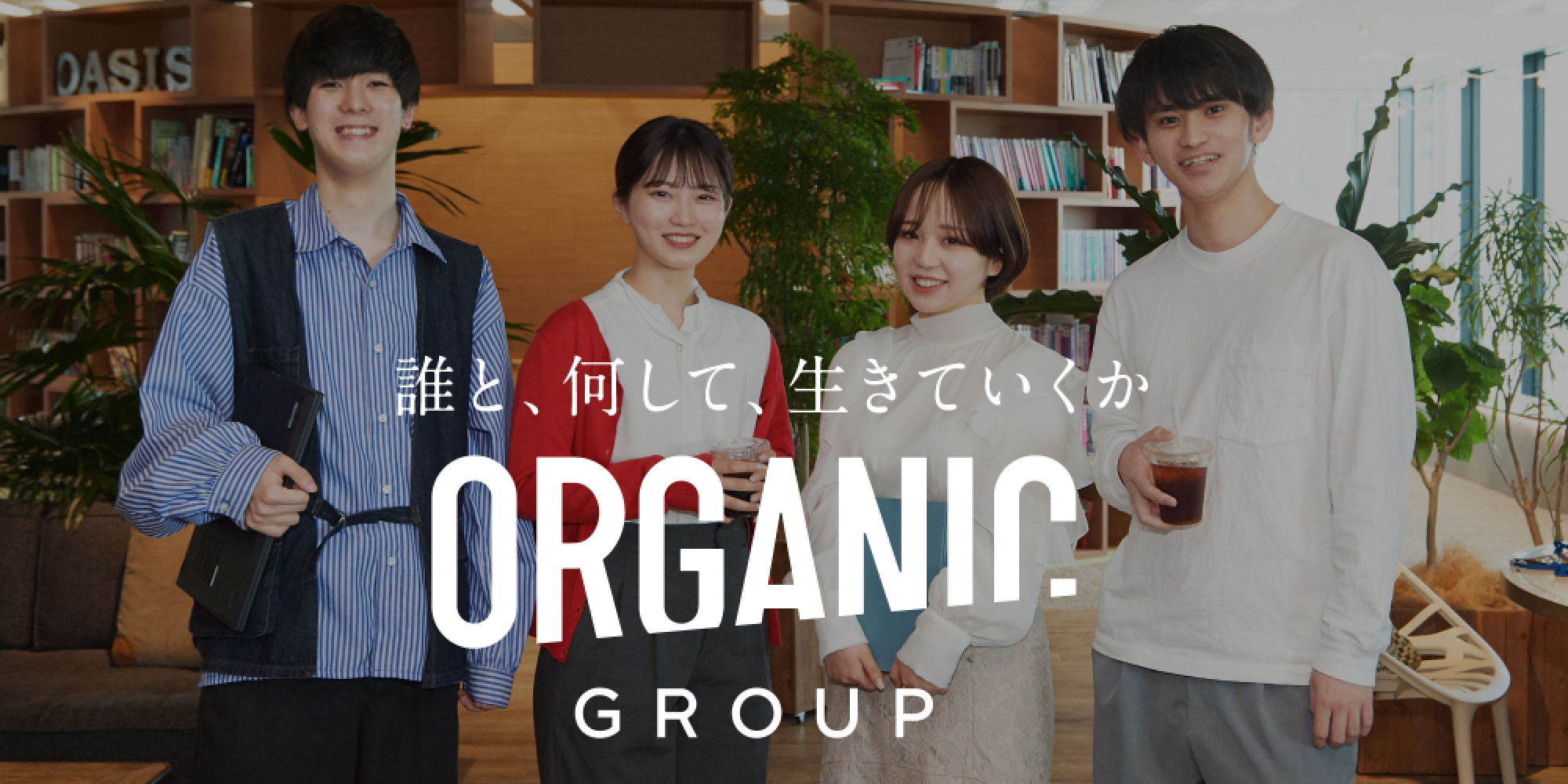
In the landscape of the Japanese startup ecosystem, there is a prevailing narrative: a visionary founder raises billions in venture capital, burns through it to acquire users, and races toward an IPO. Then there is Organic Group Inc.
Founded in 2013 with a mere 400,000 JPY (approx. $2,600 USD) in capital, Organic Group has achieved what many venture-backed "unicorns" still struggle to find: massive scale paired with absolute profitability. Without a single yen of external equity investment, this D2C (Direct-to-Consumer) powerhouse has scaled to an annual revenue exceeding 12 billion JPY, proving that in the "Future of Work," autonomy and a "Perpetual Venture Spirit" are the ultimate competitive advantages.
Profile: The Organic Group Archetype
- Core DNA: Entrepreneurial, autonomous, and data-driven.
- The Challenge: Breaking the "seniority" ceiling common in Japanese corporate culture.
- Industry: D2C E-commerce, Healthcare, Beauty, and Business Solutions.
- Company Size: ~72+ employees (operating with extreme high-leverage efficiency).
The Challenge: Growth Without Dilution
Before its rise to dominance, Organic Group faced the classic dilemma of a bootstrapped startup: How do you compete with giants while managing limited resources?
Typical Japanese firms often fall into two traps. They either become rigid, seniority-based bureaucracies that stifle innovation, or they become over-dependent on venture capital, losing strategic control in the pursuit of investor-mandated metrics. Organic Group rejected both. They needed a way to scale that didn't rely on a massive headcount or external funding, but rather on the "Individual Power" of every team member.
The Interview: Cultivating a "Perpetual Venture Spirit"
At the heart of the company’s careers page and internal philosophy is the concept of "Healthy Chaos." We sat down (metaphorically) with the insights provided by Organic Group’s leadership to understand how they maintain a startup pulse at an 12-billion-yen scale.
Q: Most companies become more bureaucratic as they grow. How does Organic Group avoid this?
"The biggest mistake a startup can make is trying to look like a 'big company' just because the revenue grows," the company’s philosophy states. At Organic Group, the structure is a "fluid, autonomous decentralized organization." There are no permanent silos. Instead, high-impact project teams form and reform based on market opportunities.
Q: You often talk about "Bold Advancement." Does age really not matter?
"We have explicitly prohibited seniority-based promotion. If you create value, you are rewarded, regardless of tenure." This isn't just corporate speak. The company points to team members who joined and became subsidiary leaders or project heads within two years. In a country where "tenure" is often synonymous with "authority," this is a radical shift.
"We are looking for individuals who want to participate in unprecedented grand challenges requiring total commitment, not those looking for a ladder to climb."
Results: The Power of the "Non-Dilutive" Model
Organic Group’s refusal to take external capital hasn't just preserved founder equity—it has built a culture of operational discipline.
- Revenue Growth: From 400,000 JPY starting capital to 12 billion JPY in annual revenue within 13 years.
- Unmatched Efficiency: Operating with a lean team of roughly 72 people, the "Revenue per Employee" metric at Organic Group is among the highest in the Japanese tech and D2C sectors.
- Market Diversification: Initially a healthcare and cosmetics manufacturer in Fukuoka, they have successfully pivoted into a multi-sector enterprise, including joint ventures with Japan’s largest legacy corporations.
Key Insights for the Future of Work
At JINZ.AI, we believe Organic Group offers a vital blueprint for the next generation of Japanese talent and HR tech. Here are the core takeaways:
- Individual Power over Institutional Structure: Scaling doesn’t always mean more people; it means more capable people. By leveraging data and a vertically integrated value chain, Organic Group achieves more with 72 people than many firms do with 600.
- The Reinvestment Loop: By growing through retained earnings, the company is not beholden to "exit timelines." This allows them to invest in "Non-Financial Capital"—brand reputation, proprietary research, and long-term talent development—that VCs might deem too slow.
- Merit-Based compensation as a Strategy: The "Value Creation and Compensation Paradigm" ensures that top talent is paid according to the wealth they generate, not their age. This is the only way to attract the "entrepreneurial mindset" necessary for non-linear growth.
- Purpose-Driven Professionalism: The organization attracts those who thrive in "Healthy Chaos." If you want a clear manual and a predictable path, you won't last. If you want the autonomy of a founder with the resources of an 80-billion-yen entity, you thrive.
Conclusion
Organic Group Inc. is more than a successful D2C company; it is a proof-of-concept for Sustainable Entrepreneurship in Japan. By prioritizing the "Individual Power" of its hires and maintaining a "Perpetual Venture Spirit," they have built a fortress of a business that is both highly profitable and strategically free.
For professionals in the Japanese market, the message is clear: The most exciting opportunities no longer require an Ivy League degree or 20 years of experience. They require the courage to enter the "chaos" and the capability to create value from scratch.
Are you ready to join a D2C (Direct-to-Consumer) powerhouse? Explore open roles at Organic Group by getting in touch with our team via the JINZ.AI Candidate Contact Form.
You might also like

Legacy Management Group: Innovating Japan’s Inheritance Sector
In the landscape of Japanese professional services, few domains are as emotionally charged and technically complex as inheritance and asset taxation. As Japan navigates an aging population and a massi

LightBridge: Bridging Japan’s Silicon Photonics R&D Gap
The global photonics landscape is currently undergoing a "supercycle." Driven by the insatiable data demands of AI and the rapid adoption of LiDAR in autonomous systems, the industry is shifting from
From Builder to Transformer: How SaR is Redefining the AI Career Path in Japan
In an era where "AI implementation" often becomes a buzzword for mere automation, a quiet revolution is happening in Tokyo’s data sector. SaR (Solve and Reclaim) , a firm specializing in data and A